World Cup Hangover Triggers Retail Sales Slump In July, K-Shaped Economy Waning | Nemos News Network
World Cup Hangover Triggers Retail Sales Slump In July, K-Shaped Economy WaningBased on BofA’s almost omniscient analysts, traders should expect a big disappointment this morning from US retail sales as the. . .
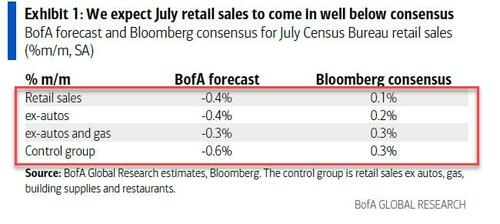
World Cup Hangover Triggers Retail Sales Slump In July, K-Shaped Economy WaningBased on BofA’s almost omniscient analysts, traders should expect a big disappointment this morning from US retail sales as the bank’s data showed a huge drop in online retail (card not present) in July, becausePrime Day and related promotions were pulled forwardfrom July to June this year. Many other retail categories also saw m/m declines, includingclothing, gas (due to lower prices) and furniture. Other factors driving the weakness in July likely included theheat wave around July 4 weekend and a modest post-World-Cup hangover effect. And once again, BofA was right…US Retail Sales plunged 0. 6% MoM in July (+0. 1% MoM exp) – the biggest MoM drop since May 2025. This drop slowed the annual rise in retail sales to +5. 0% YoY (still solid)…Interestingly, unadjusted retail sales rose in July…Both headline and core sales growth slowed YoY…Most importantly, the‘Control Group’ – which plugs directly into GDP calculation – dropped 0. 4% MoM(dramatically worse than the +0. 3% MoM rise expected). Under the hood, it was very mixed…But, the decline in online (non-store) retailer sales stands out…This was the second biggest MoM drop Nonstore Retailers sales since COVID…Real retail sales – admittedly roughly adjusted for CPI – remains positive, but slowed significantly in July…Finally, the The latest BofA data provides additional evidence thatK-shaped dynamics are waning. In each of the four weeks ending Aug 1, y/y total BAC cardspending growth was stronger among lower- than higher-income HHs. And this isn’t just due to higher gas prices. Even in discretionary categories, the “K” has turned into a “C” over the last couple of months:lower-income spending looks solid, while higher-income spending has cooled off modestly. Tyler DurdenFri, 08/14/2026 – 08:38Thispostwas originally published onthis site