When the world becomes a screen - the attention economy comes for your eyes
From phones to watches to glasses, the attention economy is closing in on the last unclaimed frontier — your gaze — and with it, your privacy, your focus, and your freedom to think.
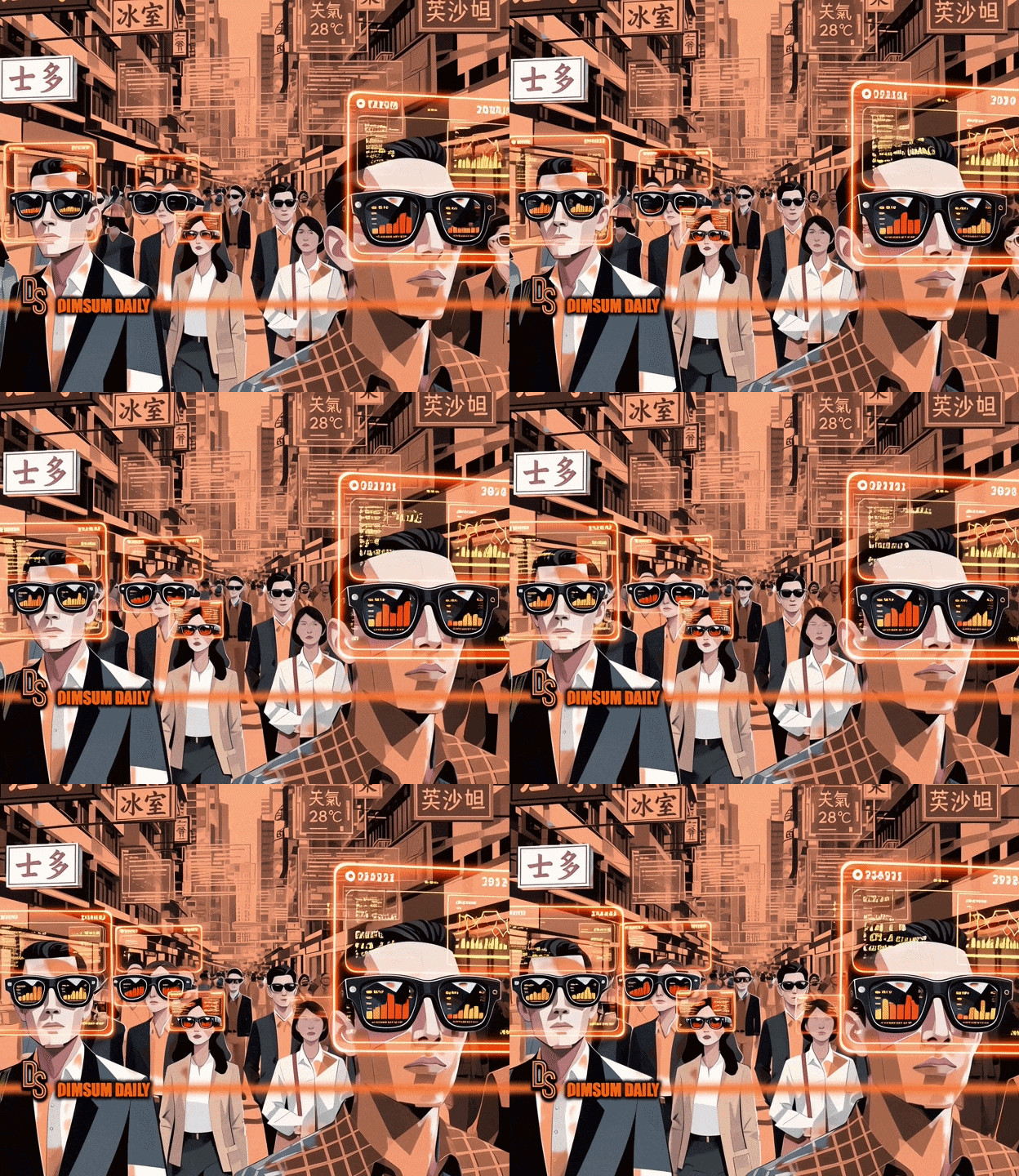
19th July 2026 – (Hong Kong) There is a particular kind of predator that does not chase. It waits, watches, and calculates. It expends no energy on pursuit because it has learned that patience is more efficient than speed. The attention economy operates on precisely this logic. It does not demand your focus. It arranges the conditions under which surrendering that focus feels like the most natural thing in the world. For two decades we have watched this arrangement mature, though “watched” may be the wrong word, since the entire enterprise depends on our not quite noticing. The smartphone was its first great achievement, a device that converted idle moments into monetizable data and fragmented hours into billions of advertising impressions. The economics were elegant. Human attention is finite, roughly sixteen waking hours a day, and any business capable of capturing and reselling slivers of it discovered a resource more scarce than oil and infinitely renewable. Global digital advertising now exceeds seven hundred billion dollars annually. That figure is not a measure of technology. It is a measure of how much of our inner life has been quietly enclosed and sold. The trajectory of the hardware tells the real story, and it tells it clearly if you slow down enough to trace the line. The phone lived in a pocket, requiring a deliberate act of retrieval. That small friction, the reach and the unlock, was the last meaningful boundary between the self and the feed. The smartwatch dissolved part of that boundary by moving the notification onto the skin, so that a vibration on the wrist could interrupt a conversation, a meal, a thought, before the wearer consciously decided anything was worth interrupting for. Each iteration of these devices has pursued the same objective: the elimination of friction. And friction, it turns out, was the only thing protecting us. Now the industry approaches its tipping point. Smart glasses represent not another device but a change in the nature of the arrangement itself. Shipments are projected to more than triple, from roughly three million units to thirteen million within a single year, and analysts speak of a hundred million wearers within the decade. The appeal to manufacturers is obvious. A phone must be picked up. Glasses are already on the face. They occupy the field of vision permanently, which means that for the first time the attention merchants gain access not to the moments we choose to give them, but to the entire continuous stream of what we see. The frontier of the eye was the last unclaimed territory. It is now being surveyed. When information arrives directly in the line of sight, there is no longer a boundary between looking at the world and looking at the machine. Every glance becomes a potential transaction. The AI assistant embedded in the frame does not wait to be summoned. It interprets, suggests, and narrates, layering a commercial overlay onto lived experience. The cognitive load this imposes is not incidental. It is the product. A mind that is never left alone is a mind perpetually available for capture, and a mind perpetually captured has no surplus capacity left for boredom, reflection, or the slow assembly of an independent thought. These were never luxuries. They were the raw materials of judgment. The privacy consequences arrive in two directions at once, which is what makes them so difficult to resist. Inward, the wearer is monitored more intimately than any prior technology allowed, their gaze, their environment, their micro-reactions all rendered into training data. Outward, everyone in the wearer’s vicinity becomes a subject of recording without their knowledge or consent. Reports have already described individuals filmed in public spaces by strangers wearing camera-equipped frames, discovering the footage only after it circulates online. When facial recognition is added, as manufacturers have signaled it will be, the ordinary anonymity of walking down a street quietly disappears. We will have built a society in which any pair of eyeglasses might be a camera connected to a database, and in which the burden of vigilance falls on the recorded rather than the recorder. The danger is not that these devices will fail. The danger is that they will succeed. A technology that is genuinely convenient, genuinely useful for the person washing dishes or navigating a foreign city, will be adopted precisely because its harms are diffuse and its benefits immediate. That is the pattern of every enclosure. The commons is not seized in a single act. It is fenced gradually, each post driven while everyone is looking at something else, until one day there is nowhere left to stand that someone does not own. What remains within our control is smaller than we would like but larger than nothing. We can audit what we consume and notice who profits from the noticing. We can reintroduce friction deliberately, keep certain hours and certain rooms unclaimed, and treat our attention as the scarce and valuable thing it demonstrably is. The market has already priced it. The only question is whether we will.