Serbia Is Building the Economy of the Future - CorD Magazine
Serbia is developing its own AI value chain, attracting technology investments and laying the foundations for the next phase of economic transformation As artificial intelligence, technological innovation and geopolitical shifts reshape the global economy, Serbia is investing in the infrastructure, capabilities and partnerships needed to compete in a rapidly changing world. Marko Čadež, President of […]
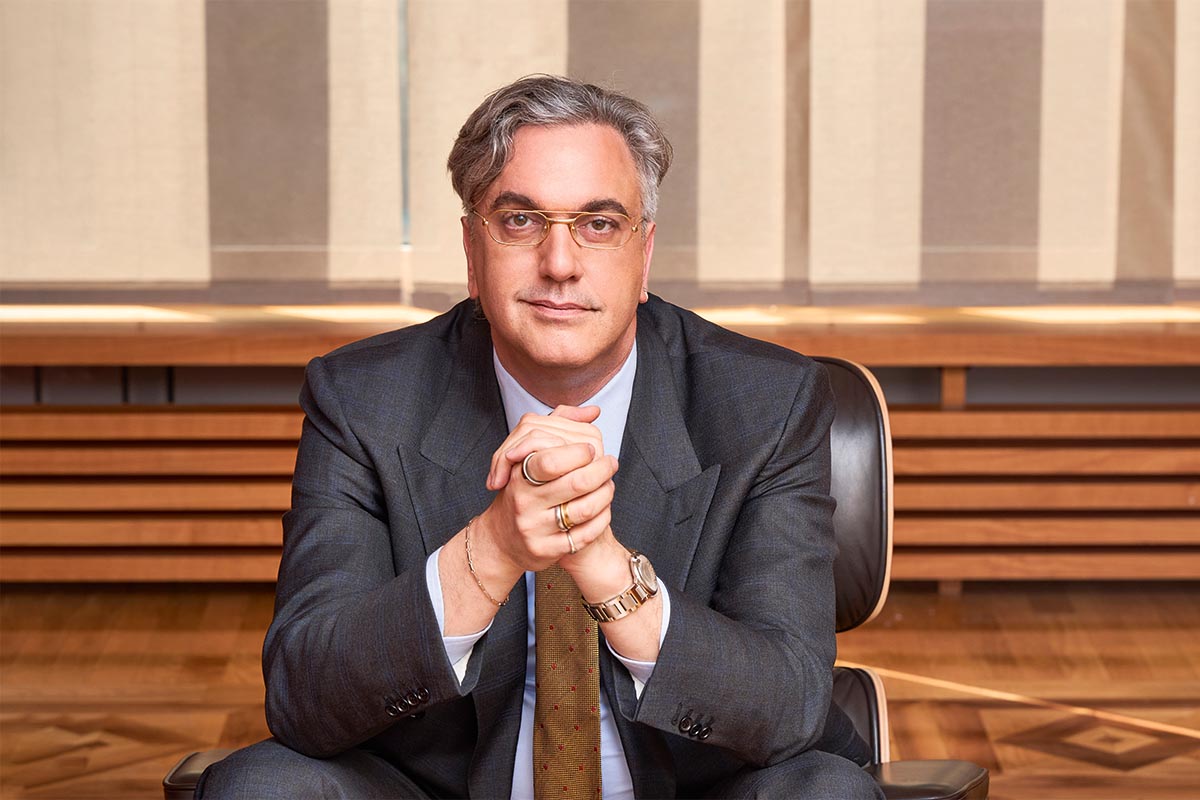
Serbia is developing its own AI value chain, attracting technology investments and laying the foundations for the next phase of economic transformationAs artificial intelligence, technological innovation and geopolitical shifts reshape the global economy, Serbia is investing in the infrastructure, capabilities and partnerships needed to compete in a rapidly changing world. Marko Čadež, President of the Serbian Chamber of Commerce, discusses how AI, industrial transformation and EXPO 2027 can help drive the country’s next phase of growth. Serbia has emerged as a regional technology and AI hub in recent years. How could this transformation reshape the country’s economic structure and international position in the long term?The strengthening of sovereign computing capacities—something only a handful of countries of Serbia’s size can currently claim—together with a national AI development platform, large language models for the Serbian language, and initiatives such as the region’s first Sovereign AI Factory and a standalone 5G network, is creating the infrastructure needed to accelerate the transformation of our economy. This transition towards a knowledge-based economy driven by innovation and advanced technologies is already underway. It is being fuelled by the rapid growth of Serbia’s ICT sector, which today includes more than 40,000 companies and entrepreneurs, employs nearly 120,000 people and generates exports exceeding five billion dollars annually. The impact is already visible in Serbia’s GDP. ICT now contributes more than construction and even more than agriculture and the food industry combined. Our export profile is also evolving, with services and high-value-added products accounting for a growing share. Software has become Serbia’s leading export product, while Serbia is also the only country in the region producing both electric and hybrid vehicles. Soon, it will become the first country in continental Europe to manufacture AI-powered humanoid robots. What we are doing today to build and control our own AI value chain and develop solutions on domestic infrastructure goes far beyond technology or the ICT sector alone. The real impact will come when AI becomes deeply integrated across industries—from manufacturing and energy to agriculture, logistics, finance and healthcare. Only then will we see its full effect on productivity, competitiveness and economic transformation. How extensively are Serbian companies using AI today, and are they adopting these technologies quickly enough? Where do you see the greatest potential for improving productivity and competitiveness?Although Serbia ranks among the world’s most AI-ready countries, adoption varies significantly by company size and sector. Large corporations and digitally native businesses in IT, telecommunications, finance and e-commerce already make extensive use of AI, from generative assistants such as ChatGPT and Claude to predictive analytics and process automation. Among SMEs, as elsewhere in the world, adoption remains below its potential. Encouragingly, however, the number of smaller businesses experimenting with AI solutions is growing rapidly. This segment offers the greatest opportunity for productivity gains and competitiveness, particularly in agriculture, manufacturing and traditional service industries. EXPO 2027 represents a once-in-a-generation opportunity for Serbia to strengthen its position on the global business, investment and technology map. To address the key barriers to broader AI adoption—which are not technological but relate to language, skills and trust—the Serbian Chamber of Commerce, in partnership with Orion Telekom, has launched the development of a Serbian business language model based on NVIDIA technology. More precisely, this is a family of AI models designed to understand Serbian, in both Cyrillic and Latin scripts, as well as local business terminology, regulations and industry-specific requirements. Our goal is to enable companies to use AI in their native language, without major investments or specialised teams, and to make digital transformation accessible to the entire economy. At a time of geopolitical uncertainty, economic fragmentation and shifting supply chains, can Serbia become a more important manufacturing and logistics hub for the European market?Nearshoring and friendshoring trends are creating new opportunities for economies such as Serbia’s, which can offer a combination of geographic proximity, industrial capabilities, skilled talent, competitive costs and a stable business environment. Countries that can serve as bridges between different regions and business communities are gaining strategic importance, and Serbia is well positioned to play that role. European companies are increasingly diversifying suppliers and bringing production closer to home. At the same time, businesses from more distant markets seeking access to European customers require production bases within Europe. Serbia is ideally positioned to serve both. Located at the intersection of major European transport corridors, Serbia has developed into a regional logistics hub. The country benefits from a competitive industrial base with strong expertise in the automotive, engineering, electrical and food-processing industries, as well as a broad network of free trade agreements providing duty-free access to markets encompassing 2. 7 billion consumers worldwide. Investors increasingly recognise Serbia not only as a manufacturing destination but also as a technology hub. In addition to factories, international companies are establishing research and development centres here. Nearly 30 global high-tech companies have already set up R&D operations in Serbia, relying on local engineering talent to develop innovations for global markets. EXPO 2027 is increasingly being described as a turning point for Serbia’s investment profile and international image. Can this event help position the country as a regional business and innovation hub in the long term?EXPO 2027 represents a once-in-a-generation opportunity for Serbia to strengthen its position on the global business, investment and technology map. More than an exhibition, it is a long-term development project and an investment in infrastructure, business growth and international visibility. The real value of EXPO lies in the partnerships, investments and business opportunities it will generate long after the event ends. Those who come to Belgrade to discover Serbia’s investment potential and innovation ecosystem are likely to return as investors, entrepreneurs and long-term partners. Importantly, EXPO 2027 has been conceived not as a three-month event but as a lasting development platform. Its legacy will include modern infrastructure, new business facilities and a state-of-the-art exhibition complex—the largest in Southeast Europe. This will enable Belgrade and Serbia to attract major international events and further strengthen their position as a regional and global destination for trade fairs and congresses. One example is GITEX AI Serbia. Belgrade will host the event for the next decade, with its inaugural edition taking place next May as part of EXPO 2027. As an extension of GITEX Global, the world’s largest technology exhibition, it will further reinforce Serbia’s growing reputation as a centre of innovation and technological excellence. Photo: Miša Obradović