Land Banking: A Novel Strategy for Data Center Expansion
Data center operators are adopting a land banking strategy to secure land years in advance. Getty ImagesPublic attention to data center expansion primarily focuses on active builds. However, it’s not just. . .
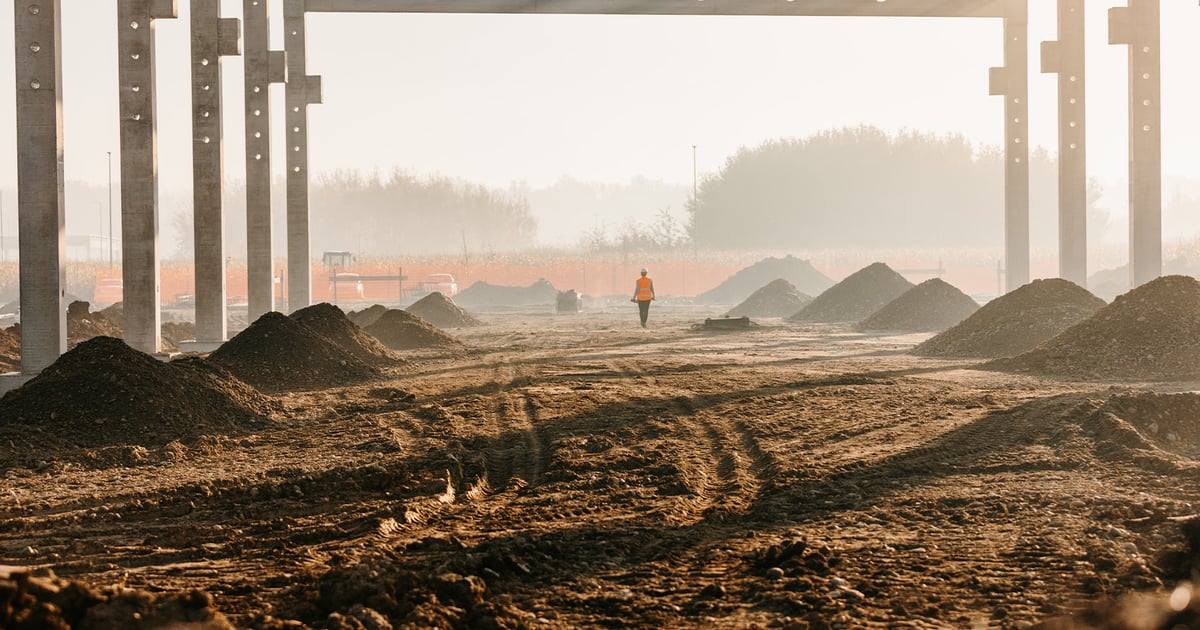
Data center operators are adopting a land banking strategy to secure land years in advance. Getty ImagesPublic attention to data center expansion primarily focuses on active builds. However, it’s not just through the construction of new facilities that the industry is growing. Increasingly, data center companies are investing in vacant land for future data center construction. Here’s a look at this practice – known as data center land banking – and the role it’s currently playing in data center growth. Understanding Data Center Land BankingData center land banking is the practice of purchasing undeveloped parcels that could become home to a data center in the future. As the term implies, the goal of land banking in this context is to build a “bank” of available land that data center companies (or real estate companies hoping to sell land to data center companies) can draw on when they deem it necessary. Data center projects almost always begin with the acquisition of real estate. The difference between land banking and other data center land purchases, however, is that with land banking, the company that buys the land has no immediate plans for building a data center on it. It could be many years before it actually breaks ground, if it does at all. Related:Land Barriers: How Zoning Regulations Could Stall Data Center Industry ExpansionOver 70% of data center operators now prioritize land banking to address rising demand and limited availability of suitable sites. (Getty Images)Trends in Data Center Land BankingIn the real estate industry writ large, land banking has been acommon practice for decades. Investors who believe that the value of parcels of land in strategic locations will increase have a history of buying them up, holding them for an extended period, then either building on them themselves or selling them off to developers. In the data center industry, however, land banking is a relatively novel idea. Historically, companies aiming to build data centers usually bought land shortly before breaking ground; accumulating large portfolios of open space with the goal of possibly building data centers on them at some indeterminate future date was uncommon. But that appears to be changing. Presumably due to the perception that theAI boomwill drive massive demand for increased data center capacity, investors are now buying up potential data center sites at an unprecedented rate. In the past year, sales of data center land have increased by141%. The share of data center development spending devoted to land acquisition rose from 19% in 2025 to30% in 2026. This has happened even as public opposition to data center projects (not to mentionproposedandactualmoratoriumson data center construction) grows. These data points suggest that land, like energy and water, has become a critical resource for investors aiming to sustain data center growth. Related:AWS Data Center Withdrawal Signals Growing Political, Community ChallengesWhy Are Investors Creating Data Center Land Banks?From the perspective of investors and data center companies, there is plenty of reason to believe that land banking will pay off, despite the specter of potential challenges like data center moratoriums:Securing land in competitive hubs: Open space is scarce in regions with high data center concentrations, such as Northern Virginia and Silicon Valley. Purchasing land in these regions when it becomes available can be a smart move for companies aiming to add data centers in strategic locations in the future, even if they don’t need one at present. Getting ahead of slow grid hookups: With connections of new data centers to power grids now takingyearsin some cases, buying land early-on, then getting started on the long process of queuing it up for grid connections, can help prevent grid hookups from becoming bottlenecks once a data is under construction. Permitting preparation: Similarly, purchasing land well in advance of an anticipated data center project can provide extra time for sorting through thepermitting requirementsnecessary to build a facility. In addition to addressing key challenges in data center growth, land banking offers a low-risk, high-reward financial strategy. If investors end up not building a data center (or selling their land to someone who will) on the land they hold “in the bank,” they’re likely to be able to develop it in other ways, since open land can serve a variety of purposes. Plus, holding costs (in the form of taxes, maintenance and so on) are also minimal for undeveloped land in most places. Related:Zoning and Land Use Considerations for Data CentersThus, as long as data center land bankers don’t overpay steeply for the land they purchase, they stand to make substantial profits while risking little. This makes data center land banking a more attractive form of investment in many respects than actually building a physical data center, which can take years to generate an operating profit (if it does at all), and whose long-termYield-on-Cost metrics(which are essential for driving data center ROI) are difficult to predict. The Future Outlook for Data Center Land BankingData center land banking appears trendy at present, but will it prove to be a lasting strategy?It’s hard to say. On the one hand, the practice has clear strengths from a finance and investment perspective, as explained above, and it makes sense for an industry that is a period of rapid expansion. On the other, the data center industry is arguably operating under conditions that are more fluid and unpredictable than ever before. Land banking is less likely to deliver major financial benefits if more states or countries ban data center projects – in which case land that is currently priced steeply because of its proximity to infrastructure or other data centers would likely decline a lot in value. It’s also possible to envision scenarios, such as regulatory requirements that data centersgenerate their own on-site powerrather than using the grid, in which case the grid hookup lead-time advantage conferred by land banking would become irrelevant. Changes to local permitting requirements for data centers could also mean that land that once seemed like a great site for a data center is no longer considered one. What does seem certain is that if data center land banking becomes a widespread, enduring practice, it will likely fuel even more opposition to data center expansion, given the likely public perception that data center companies are “hogging” land they may not even use. Large, well-funded data center companies and investors will gain an edge, leveraging their capital to secure real estate and flexibility unavailable to smaller businesses. About the AuthorTechnology AnalystChristopher Tozzi is a technology analyst with subject matter expertise in cloud computing, application development, open source software, virtualization, containers and more. He also lectures at a major university in the Albany, New York, area. His book, “For Fun and Profit: A History of the Free and Open Source Software Revolution,” was published by MIT Press.