[In This Economy] Why Singapore moves while Metro Manila doesn’t
I just came from Singapore where my new book,Twin Plagues: How Duterte and Covid-19 Wrecked the Philippine Economy, was launched. It’s my third time in Singapore, and I’m always amazed at their transportation. . .
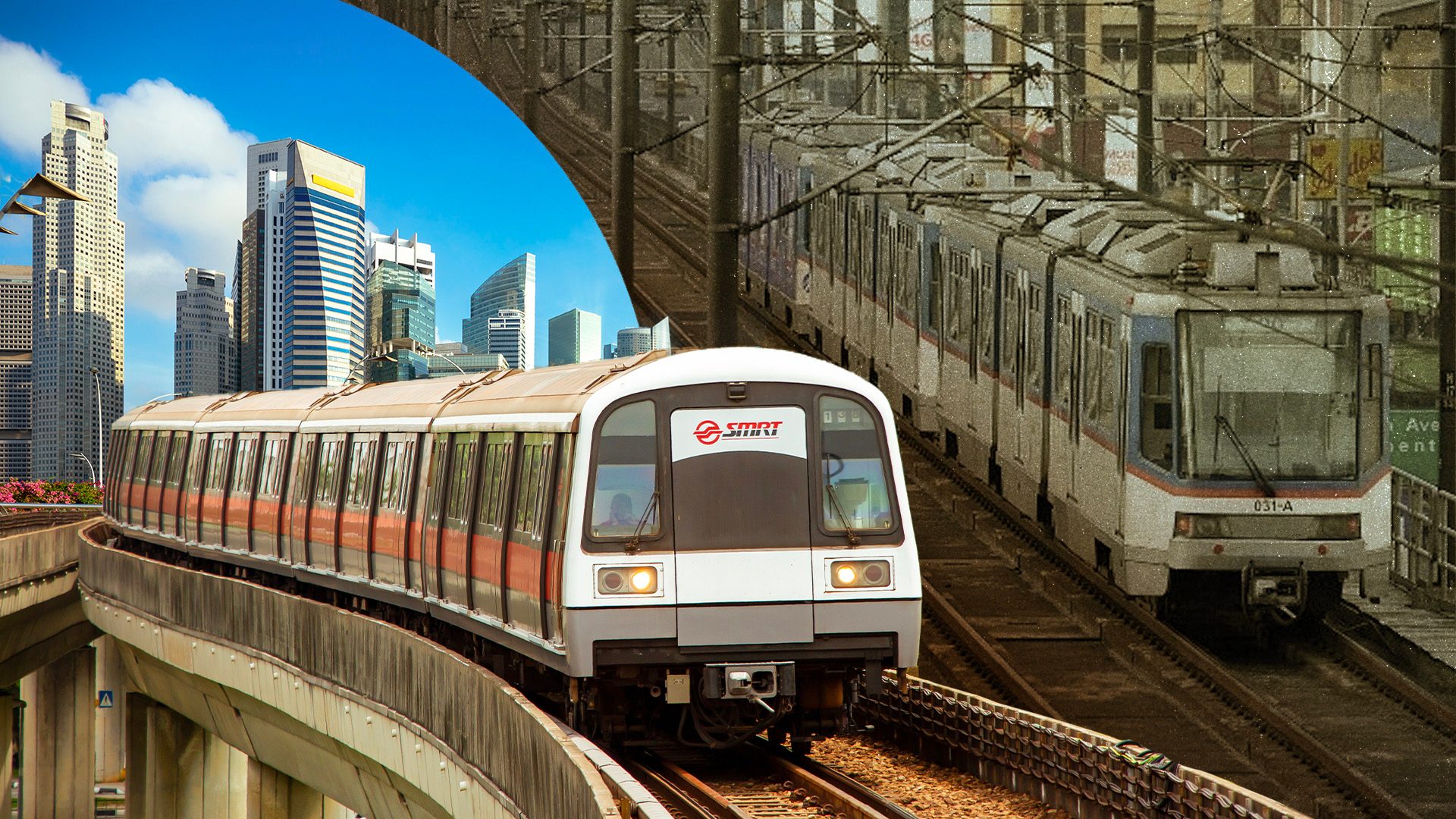
I just came from Singapore where my new book,Twin Plagues: How Duterte and Covid-19 Wrecked the Philippine Economy, was launched. It’s my third time in Singapore, and I’m always amazed at their transportation system, particularly their railway system. Trains arrive every two to three minutes. Stations are clean and cool. A single card (or these days, any credit card) gets you on any train or bus. Then you fly home and go back to the drudgery of lining up for an hour at an MRT-3 station, or waiting for a bus along EDSA in the rain. The gap is staggering especially when you put numbers on it. Singapore’s rail network now spans about 250 kilometers across six MRT lines, carrying more than 3 million passengers daily, in a city-state of just about 6 million people. In fact, two more lines are under construction, and the network is set to reach around460 kilometersby 2040. Metro Manila, by contrast, with more than twice Singapore’s population, has roughly 60 kilometers of urban rail spread across three lines built decades apart. They also barely connect with one another. We used to be a pioneer in the region: LRT-1 opened in 1984, the first light rail system in Southeast Asia, three years before Singapore’s MRT carried its first passenger. Singapore has caught up, then lapped us many times over. How Singapore did itSingapore’s exemplary rail system did not spring from wealth alone. Instead, it sprang from meticulous planning and continuity. The government identified the need for a rail backbone in its1971 Concept Plan, debated it for a decade, and committed in 1982 to what was then its largest public project ever. Every government since has kept building on it, regardless of who was in power. Institutions mattered, too. Since 1995, a single agency, the Land Transport Authority, has planned roads, rails, and buses as one integrated and coherent system. Buses are not competitors to trains butfeeders: routes are planned (and paid for) by the state, and private operators are contracted to run them. Fares are integrated so a trip combining bus and train doesn’t punish the transferring passenger. Singapore also made driving expensive on purpose. Acertificate of entitlement, which one needs just to own a car, can cost more than the car itself. While politically painful, it pushed people toward public transport and freed up roads for buses. In contrast, the three rail lines in the Philippines were built under different administrations, different contracts, and different technologies. Agencies with overlapping mandates (the transportation department, the Land Transportation Franchising and Regulatory Board, the Metropolitan Manila Development Authority, and local governments) each hold a piece of the commuting puzzle; no one holds the whole. Meanwhile, we kept building roads and skyways instead, which mostly benefit the one in 10 or so Filipino households that own cars. The Japan International Cooperation Agency (JICA) hasestimatedthat congestion costs Metro Manila about P3. 5 billion a day, and that could balloon to P5. 4 billion daily by 2035 if nothing changes. What we can realistically doThe good news is that theMetro Manila Subway,MRT-7, and theNorth-South Commuter Railwayare all under construction, and theLRT-1 extensionalready reaches Parañaque. The first task then is to just finish what we started. Our record here is not encouraging. Take the case of MRT-7 along Commonwealth Avenue, going near UP Diliman. It broke ground in 2016 and may only partially open in 2027. Right-of-way problems have stalled the LRT-1 extension’s later phases. Every delay compounds costs and erodes public trust. Second, we need to integrate our systems. A commuter today may need, for instance, separate cards, separate lines, and long walks between stations. All of this should have been designed as one. A truecommon station, seamless transfers, and a single fare system across all trains, buses, and modern jeepneys would raise ridership without having to lay a single new track. Third, treat buses as infrastructure. TheEDSA Busway or Carousel, born as a pandemic stopgap, now moves hundreds of thousands daily. This model of dedicated lanes, service contracting, and government-planned routes could be extended to other corridors far more cheaply and quickly than rail. TheCebu Bus Rapid Transit Projectis a good example, but it has “faced repeated delays” itself and a “series of restructurings and deadline extensions. ”Likewise, rather thantreating jeepneys as a problem to be phased out, we could treat them as Singapore treats its feeder buses: the last-mile link between homes and stations. The jeepney modernization program might face less resistance if drivers were offered contracted feeder routes, with stable pay, instead ofloans they cannot afford. Fourth, the constant exhortation to fix institutions. We may need our own version of the Land Transport Authority (LTA): a single metropolitan body with the mandate and budget to plan all modes together, insulated from the three-year and six-year election cycles that keep resetting our plans. The Metropolitan Manila Development Authority (MMDA) hardly fits the bill. It was designed as a coordinating body, not an integrated transport authority. (Interestingly, both the MMDA and Singapore’s LTA were founded in the same year, 1995. )None of the above is technically hard. The binding constraint is political will sustained across administrations—something our leaders have rarely managed. –Rappler. comJan Carlo “JC” Punongbayan, PhD is an associate professor at the University of the Philippines School of Economics (UPSE). His professional experience includes the Securities and Exchange Commission, the World Bank Office in Manila, the Far Eastern University Public Policy Center, and the National Economic and Development Authority. JC writes a weekly economics column for Rappler. com. He is also co-founder of UsapangEcon. com and co-host of Usapang Econ Podcast. His first book, False Nostalgia: The Marcos “Golden Age” Myths and How to Debunk Them, was published by Ateneo de Manila University Press in February 2023. His second book, Twin Plagues: How Duterte and Covid-19 Wrecked the Philippine Economy, will be published by Penguin Random House SEA in June 2026. Follow him on Instagram (@jcpunongbayan). Here are other In This Economy pieces you may have missed:Click here for otherIn This Economyarticles.