Eurobank unveils €1bn plan to reshape digital banking
Eurobank says 96 per cent of transactions are now digital Eurobank this week presented its new Banking Forward strategy in Athens, outlining a €1 billion technology investment programme alongside a broad digital banking transformation centred on artificial intelligence (AI), mobile banking and redesigned customer journeys for both retail and business…
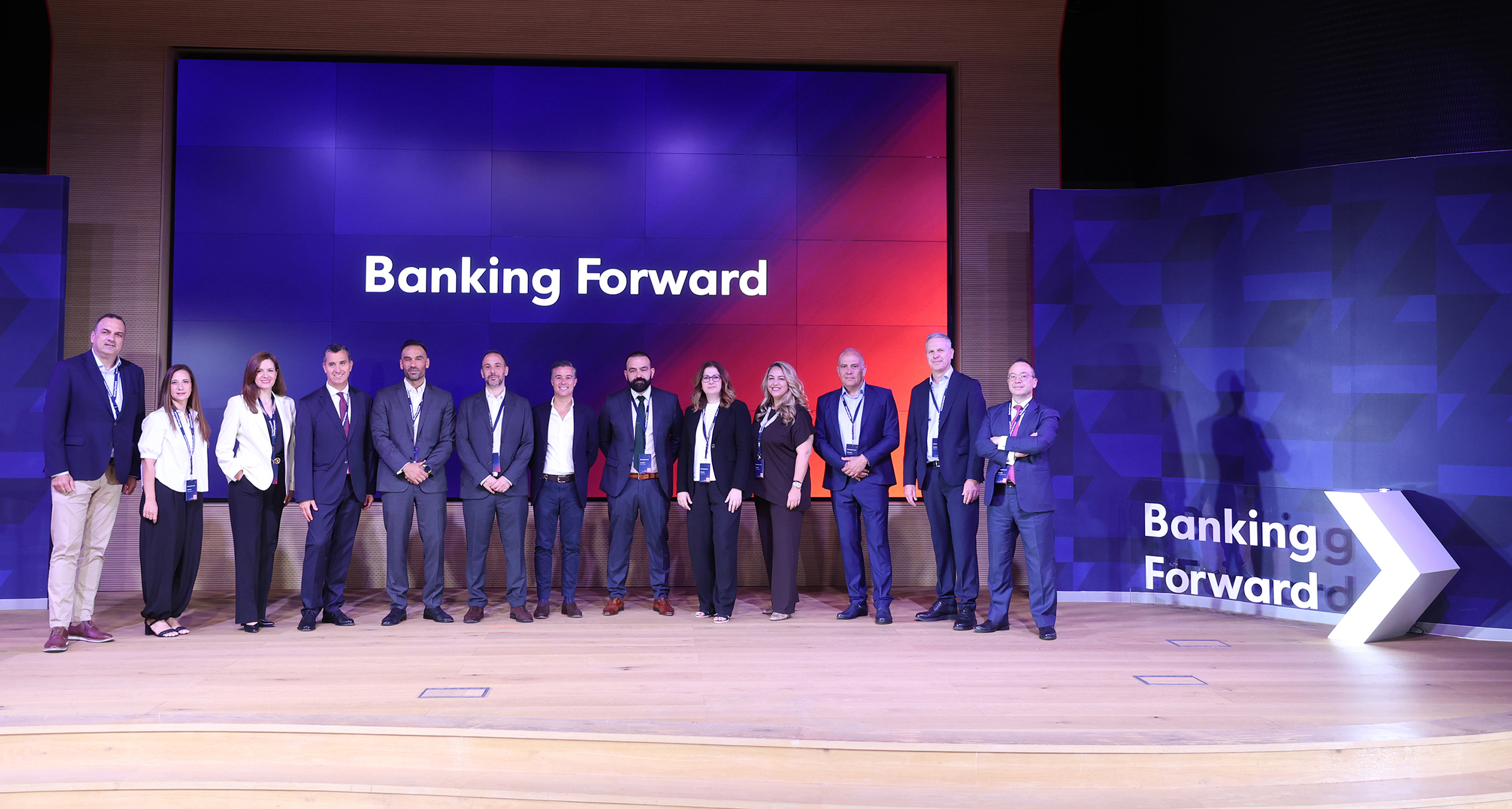
Eurobank says 96 per cent of transactions are now digitalEurobankthis week presented its newBanking Forward strategy in Athens, outlining a€1 billion technology investment programmealongside a broad digital banking transformation centred on artificial intelligence (AI), mobile banking and redesigned customer journeys for both retail and business clients. The event took place on June 29 at theEurobank Campus Conference Centre in Nea Ioniain the presence of chairman George P. Zanias and deputy chief executives Constantinos Vassiliou, Iakovos Giannaklis and Stavros Ioannou. The programme showcased how the bank is using technology, data, AI and a modern digital architecture to create a more personalised, simpler and more efficient banking experience. At the centre of the strategy isthe largest technology investment programme in Eurobank’s history, with approximately€1 billionearmarked for the 2025 to 2028 period to strengthen infrastructure, cloud technologies, data capabilities, AI and new digital services. The event also featured the announcement of anexpanded strategic partnership with Mastercard, giving Eurobank Mastercard cardholders privileged access to music, cinema, sport and entertainment experiences through Mastercard’s Priceless platform, alongside access to its worldwide acceptance network, advanced security solutions and modern payment technologies. Eurobank Group Chief Digital Officer Constantinos Paikos coordinated the event and presented the strategic direction behind Banking Forward and the trends shaping the future banking experience. International banking developments were examined by Accenture Song Global Banking and Capital Markets Lead Rodrigo Alvarez, while Accenture Financial Services Managing Director and Innovation Lead Nikos Gatidis discussed changing customer expectations and the characteristics defining today’s digital banking environment. Eurobank Chief Retail Growth Officer Yiannis Serafeimidis and Mastercard country manager for Greece, Cyprus and Malta Panagiotis Polydoros presented the expanded partnership between the two organisations. They said the collaboration now extends beyond payments into a wider ecosystem of services and experiences, with Eurobank Mobile App users gaining privileged access to high-demand music events and selected experiences across music, cinema, sport and entertainment through the Mastercard Priceless platform. Senior Eurobank executives also outlined different elements of the bank’s digital ecosystem, including technology infrastructure, cyber security, generative AI, digital customer journeys and business banking services. According to figures presented during the event,96 per cent of all Eurobank transactions are now completed digitally, while61 per centare carried out through the Eurobank Mobile App. Among customers aged up to 35,94 per centof transactions take place through the mobile application. The bank records approximately574 million e-Banking and Mobile Banking logins annually, while customers completemore than one million digital transactions every day. Around50 per cent of Eurobank’s applications and digital channels already operate in the cloud, supported by more than1,600 professionalsworking at its Digital & Technology Hub across more than30 cross-functional development teams. Those teams have deliveredmore than 100 new digital capabilities during the past six months. Eurobank also saidone in every three banking productsis now acquired entirely through digital channels, representing growth ofmore than 160 per centduring the first half of 2026 compared with the corresponding period of 2025. The bank described Banking Forward as a customer-focused strategy built around a“phygital” service model, combining digital convenience with personal interaction while using technology, data and AI to tailor services to customers’ everyday needs. It said the strategy rests on three interconnected pillars. The first focuses on usingdataandAIto anticipate customer needs and deliver highly personalised services. The second aims tosimplify customer interactionsthrough conversational digital banking. The third integrates banking and non-banking services into broader digital ecosystems designed to create additional value for customers and businesses. Eurobank saiddigital bankinghas become embedded in customers’ daily routines. Users log into the Eurobank Mobile App an average of27 times each month, while seven out of 10 digital customers now manage all of their banking exclusively through mobile devices. The bank’s digital channels currently supportmore than 5,200 payment options, processing up to2,500 transactions every minutewhile serving as many as160,000 customers every hour. Mobile banking transactions increased bymore than 40 per cent during 2025, while during the first five months of 2026 the number of customers using mobile banking wastwice the number using traditional e-Banking. Digital product sales have also expanded rapidly, the bank pointed out. During the first half of 2026, one in three banking products was purchased entirely online, while95 per cent of prepaid cardswere issued through the Eurobank Mobile App. The bank saidtwo out of every three active customers are now Digital First users, relying primarily on Eurobank as their main banking provider and maintaining significantly stronger relationships through deposits and lending products. In the business sector, approximately30 per cent of the value of digital corporate transactions in Greeceis processed through Eurobank’s digital channels. A significant part of the presentation focused onartificial intelligence, which the bank said is playing an increasingly important role in customer service, productivity and innovation. Its AI ecosystem includesEVA, the bank’s customer virtual assistant,myEVA, an internal AI voice assistant for staff, theGenAI Factoryplatform and theDigital Brainprogramme. AI is already being used in areas including mortgage assessments, customer feedback analysis, contract processing and the development of new digital services. Eurobank said itsGenAI Factorycombines Microsoft Azure, EY. ai Agentic Platform and NVIDIA accelerated computing, while a strategic partnership with Fairfax Digital Services makes it one of the first banking groups in south-eastern Europe to adopt structured Agentic AI solutions. The bank is also developing an enterprise-wide Digital Brain with Accenture to integrate AI throughout customer experience and internal operations, while its Global Delivery Centre in Pune, India, established with LTM, formerly LTIMindtree, andFairfax Digital Services, supports innovation across the group’s international operations. Eurobank added thatmore than 1,500 employeescompleted specialist AI training programmes totallingover 17,000 hoursduring 2025 and 2026, while the bank continues supporting theMSc in AI for Digital Transformationat the Athens University of Economics and Business. The bank said technology investment is supported by acomprehensive governance frameworkensuring AI is deployed safely, responsibly and transparently in line with regulatory requirements. Eurobank also highlighted thescaleof its wider technology transformation. Its Digital & Technology Hub has recruited around250 new professionalsin recent years, while its Digital Factory, comprising13 agile teams and 146 specialists, has reduced the development time for new digital products from approximately30 weeks to just eight weeks. The bank said its technology architecture is built around five interconnected layers covering digital services, customer experience orchestration, data and AI, core banking systems and cloud infrastructure. During periods of peak demand, Eurobank processesmore than 4. 5 million card transactions every day, whileProject Omegais redesigning the bank’s core banking architecture to improve flexibility and accelerate product development. Eurobank said around half of its applications now operate in the cloud, enabling stronger security, greater flexibility and faster deployment of new services. The bank added that technology development extends across its five markets ofGreece, Cyprus, Bulgaria, Luxembourg and the United Kingdom, highlighting the completion of its Temenos core banking migration in Luxembourg, the operational integration ofEurobank Cyprus and the Bank of Cyprusunder Eurobank Ltd in Cyprus, and continuing digital transformation at Postbank in Bulgaria. Finally, Eurobank said thatsecurity and trust remain fundamental to digital banking, with continued investment in cyber security, regulatory compliance, resilient infrastructure, European partnerships and staff awareness forming the foundation of its expanding digital ecosystem.