CME rolls out a monthly farm-economy benchmark across 5 sectors
(Neutral)(Neutral)CME Group (NASDAQ:CME)launched theCME Group Agriculture Index, a broad benchmark tracking five key sectors of the global farm economy: Grains, Oilseeds, Livestock, Dairy and Lumber. The index. . .
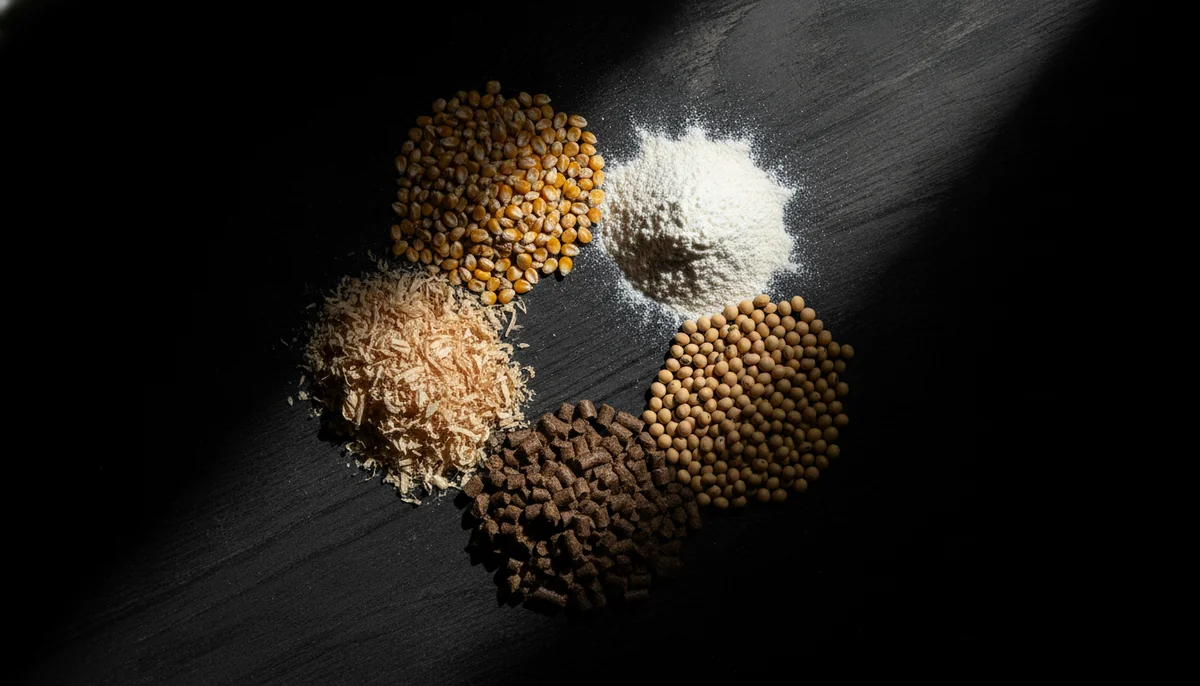
(Neutral)(Neutral)CME Group (NASDAQ:CME)launched theCME Group Agriculture Index, a broad benchmark tracking five key sectors of the global farm economy: Grains, Oilseeds, Livestock, Dairy and Lumber. The index uses futures prices, monthly updates and sector weightings to reflect aggregate farm commodity costs and structural supply-chain changes worldwide. Loading. . . Loading translation. . . AI-generated analysis. How Rhea-AI works. Not financial advice. PositiveNone. NegativeNone. CME’s launch of a broad Agriculture Index adds a unified benchmark across5major farm-related sectors, extending its data footprint alongside the400-producer Ag Economy Barometer. Investors may watch for adoption metrics and any follow-on derivatives tied to the index. Index sectors covered5 sectorsGrains, Oilseeds, Livestock, Dairy and Lumber in new Agriculture IndexProducer survey size400 producersSample size for Purdue University/CME Group Ag Economy BarometerDateEventSentiment24h MoveCatalystJul 07Sentiment barometer updateNeutral+2. 5%Update on Purdue/CME Ag Economy Barometer showing softer farmer sentiment metrics. Jul 02Volume record reportPositive+2. 4%Record June average daily volume and second-highest Q2 ADV across key product lines. Jun 30Beef trim contracts launchPositive+1. 0%Planned launch of new Lean Beef Trim futures and options to expand cattle risk tools. Jun 30Single stock futures launchPositive+1. 0%Announcement of more than 50 Single Stock futures contracts pending regulatory review. Jun 17Leadership transitionNegative-3. 5%Planned CEO change with Terry Duffy stepping down and Lynne Fitzpatrick named successor. 24h Move is the share-price change in the day after each event; other market factors may also have contributed. Pattern DetectedRecent CME product and volume announcements have coincided with modest share gains, while leadership transition news drew a negative reaction, indicating news-driven moves have generally tracked the tone of each release. Short Interest1. 45%of float0%15%30%+lowas of 2026-06-15Days to cover: 1. 25Reported short interest appears relatively low, implying limited short-squeeze potential and suggesting that positioning alone is unlikely to drive extreme volatility absent new catalysts. futuresfinancial"enables clients to trade futures, options, cash and OTC markets"A futures contract is a standardized agreement to buy or sell an asset (like a commodity, currency, or stock index) at a fixed price on a specific future date. Think of it like locking in the price of a house today for a move-in years from now: it lets buyers and sellers protect themselves against price swings or bet on which way prices will move. For investors, futures matter because they provide a cheap way to manage risk, amplify returns through leverage, and signal market expectations that can move cash prices. optionsfinancial"enables clients to trade futures, options, cash and OTC markets"Options are contracts that give investors the right to buy or sell an asset at a specific price within a certain time frame. They function like a reservation or a ticket that allows for potential profit or protection against price changes, making them useful tools for managing investment risks or speculating on market movements. otc marketsfinancial"trade futures, options, cash and OTC markets, optimize portfolios"Over-the-counter (OTC) markets are trading venues where buyers and sellers deal directly through dealers or electronic networks instead of on a formal exchange; think of a neighborhood flea market versus a supermarket. They matter to investors because OTC-listed stocks often represent smaller or international companies with fewer reporting requirements, which can mean lower liquidity, wider price swings and higher risk but sometimes earlier access to growth opportunities. central counterparty clearingfinancial"it operates one of the world's leading central counterparty clearing providers"A central counterparty clearing (CCP) is a specialized financial intermediary that sits between buyers and sellers of securities or derivatives, becoming the buyer to every seller and the seller to every buyer to guarantee trades are completed. Like an insurance-backed referee, it manages the risk of someone failing to pay by requiring collateral, pooling resources, and simplifying many trades into smaller net payments, which helps investors by lowering the chance of loss from a counterparty default and improving market stability and liquidity. AI-generated analysis. How Rhea-AI works. Not financial advice. ,/PRNewswire/ --CMEGroup, the world's leading derivatives marketplace, today announced the launch of its Agriculture Index, a broad-based price benchmark designed to track the aggregate performance of five sectors fundamental to the global farm economy. The index, which will be updated monthly, integrates futures prices from Grains, Oilseeds, Livestock, Dairy and Lumber. These components allow the benchmark to comprehensively track structural changes in supply chains, shifting industrial demand and changing consumer habits impacting the cost of farm goods around the world. "Agriculture doesn't move one commodity at a time–and neither should the benchmarks that track it," said John Ricci, Managing Director and Global Head of Agricultural Products atCMEGroup. "By aggregating futures prices across five sectors on a single platform, theCMEGroup Agriculture Index gives producers, traders and analysts a more complete read on the farm economy and where it's headed. "The index methodology is designed to provide a fair representation of commodity costs, neutralizing price differences between delivery months for futures contracts and applying appropriate weightings across different markets. The Agriculture Index complements thePurdue University/CME Group Ag Economy Barometer, a nationwide, monthly measure of 400 producers' sentiment and outlook on the agricultural economy. For more information on the CME Group Agriculture Index, please visithttps://www. cmegroup. com/drafts/markets/agriculture-index. As the world's leading derivatives marketplace, CME Group (www. cmegroup. com) enables clients to trade futures, options, cash and OTC markets, optimize portfolios, and analyze data – empowering market participants worldwide to efficiently manage risk and capture opportunities. CME Group exchanges offer the widest range of global benchmark products across all major asset classes based oninterest rates,equity indexes,foreign exchange,cryptocurrencies,energy,agricultural productsandmetals. The company offers futures and options on futures trading through theCME Globexplatform, fixed income trading via BrokerTec and foreign exchange trading on the EBS platform. In addition, it operates one of the world's leading central counterparty clearing providers, CME Clearing. CME Group, the Globe logo, CME, Chicago Mercantile Exchange, Globex, and E-mini are trademarks of Chicago Mercantile Exchange Inc. CBOT and Chicago Board of Trade are trademarks of Board of Trade of the City of Chicago, Inc. NYMEX, New York Mercantile Exchange and ClearPort are trademarks of New York Mercantile Exchange, Inc. COMEX is a trademark of Commodity Exchange, Inc. BrokerTec is a trademark of BrokerTec Americas LLC and EBS is a trademark of EBS Group LTD. The S&P 500 Index is a product of S&P Dow Jones Indices LLC ("S&P DJI"). "S&P®", "S&P 500®", "SPY®", "SPX®", US 500 and The 500 are trademarks of Standard & Poor's Financial Services LLC; Dow Jones®, DJIA® and Dow Jones Industrial Average are service and/or trademarks of Dow Jones Trademark Holdings LLC. These trademarks have been licensed for use by Chicago Mercantile Exchange Inc. Futures contracts based on the S&P 500 Index are not sponsored, endorsed, marketed, or promoted by S&P DJI, and S&P DJI makes no representation regarding the advisability of investing in such products. All other trademarks are the property of their respective owners. CME-GView original content:https://www. prnewswire. com/news-releases/cme-groups-new-agriculture-index-delivers-unified-price-benchmark-for-the-global-farm-economy-302821776. htmlSOURCE CME GroupFAQWhat is the new CME Group Agriculture Index and what does it track?The CME Group Agriculture Index is a broad benchmark that tracks five key farm-economy sectors: Grains, Oilseeds, Livestock, Dairy and Lumber, using futures prices to reflect aggregate agricultural commodity costs and structural changes in global supply chains. How often is the CME Group (CME) Agriculture Index updated?The CME Group Agriculture Index is updated on a monthly basis. According to CME Group, the index refreshes its futures-based components regularly to capture evolving supply, demand and consumer trends in global agricultural markets. Which commodity sectors are included in the CME (CME) Agriculture Index?The CME Group Agriculture Index includes futures prices from Grains, Oilseeds, Livestock, Dairy and Lumber. According to CME Group, these sectors provide a comprehensive view of costs and trends across the global farm economy. How does the CME Group Agriculture Index calculate its benchmark values?The CME Group Agriculture Index uses futures prices, adjusts for delivery-month differences and applies sector weightings. According to CME Group, this methodology aims to fairly represent aggregate commodity costs across diverse agricultural markets worldwide. Who can use the CME Group Agriculture Index and for what purpose?Producers, traders and analysts can use the CME Group Agriculture Index to gauge the farm economy. According to CME Group, the benchmark offers a unified view of agricultural price trends and shifting demand patterns across multiple commodity sectors. How does the CME Group Agriculture Index relate to the Purdue/CME Ag Economy Barometer?The CME Group Agriculture Index complements the Purdue University/CME Group Ag Economy Barometer. According to CME Group, the index measures commodity price performance, while the Barometer tracks monthly sentiment and outlook from 400 U. S. agricultural producers.