California ran more than half its entire economy on sunlight for a full month and changed what the world thought was possible
In May 2026, California crossed a threshold no major economy had reached before. For an entire month, solar panels — from sprawling desert installations to rooftop arrays across millions of homes — generated. . .
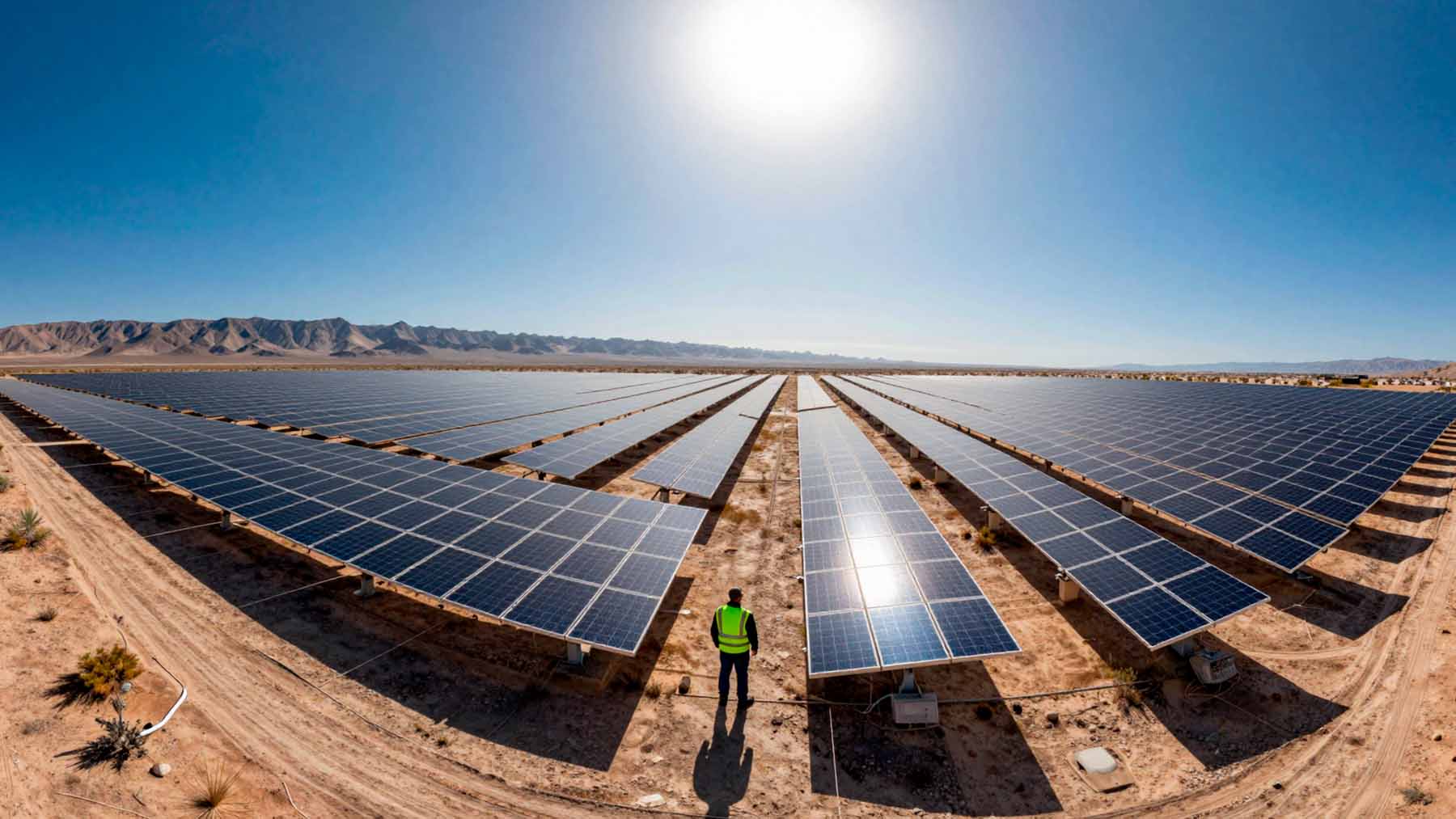
In May 2026, California crossed a threshold no major economy had reached before. For an entire month, solar panels — from sprawling desert installations to rooftop arrays across millions of homes — generated more than half the state’s electricity. Not for a single afternoon. Not during a record-breaking weekend. For a full month. The milestone passed quietly, without ceremony. But the data is unambiguous: 51% of California’s electricity came from sunlight in May, a global first that’s already reshaping expectations about how fast a modern economy can transform its power supply. A global first, hiding in plain sightThe confirmation came from Ember, an independent energy think tank that tracks power generation worldwide. According to their analysis, California is the first major economy on the planet to generate more than half its electricity from solar for an entire month — not a projection or a modeling exercise,but recorded output data from May 2026. Internationally, countries that have invested heavily in both solar and batteries are watching California’s grid data closely — some of them not far behind. Scale matters here. Hungary reached 47% solar generation in June 2025, putting it tantalizingly close to the same milestone. But Hungary’s economy is a fraction of California’s size. Crossing 50% in a smaller grid is a meaningful achievement; doing it while powering the world’s fifth-largest economy is a different kind of proof point entirely — one with heavy manufacturing, massive data centers, and tens of millions of residents running primarily on sunlight. That’s what makes May 2026 a global benchmark rather than just a state record. It shifts the terms of the debate everywhere else. Solar’s quiet squeeze on fossil fuelsCalifornia’s electricity mix has been simplifying for years. Coal is essentially gone. Nuclear plays a minor, stable role. What remains of fossil fuel generation is almost entirely natural gas — and solar is steadily pushing that out too. The displacement isn’t dramatic on any single day. It’s cumulative. Solar outproduced natural gas not just in May 2026 but in every month of 2026 leading up to it. Each kilowatt-hour generated by a solar panel is one that a gas turbine doesn’t need to produce. Over months and years,that arithmetic adds up to a fundamentally different grid. California’s climate commitments make this especially significant. The state has set aggressive targets for reducing greenhouse gas emissions, and the power sector is one of the clearest places to measure progress. When solar consistently beats gas across the calendar, those emissions targets start to look achievable rather than aspirational. Batteries: the silent partner behind the recordSolar power has an obvious limitation:the sun sets. For years, that constraint kept solar’s contribution capped at what daytime demand alone could absorb. California’s battery buildout changed that equationentirely. The California Independent System Operator, known as CAISO, now manages16 gigawatts of battery storageconnected to the grid — enough capacity to capture surplus solar generation during the midday peak and release it into the evening hours, when demand stays high but sunlight is gone. During parts of the night, batteries routinely cover more than one-quarter of the state’s total electricity demand. Without that storage infrastructure, the May milestone likely wouldn’t have happened. Batteries allowed solar to count not just during sunny afternoons but across the full 24-hour day, transforming it from a daytime resource into something closer to a baseload contributor. That’s why the 51% figure reflects monthly generation,not just peak moments. A decade of transformation, by the numbersTen years ago, California was already considered a solar leader. In May 2016 — the same month that would later set the global record — solar accounted for 17% of the state’s electricity generation, well above the national average at the time and representing years of policy support and sustained investment. From 17% to 51% in a decade is a compounding story, not a linear one. Growth accelerated as costs fell, installations multiplied, and the grid adapted to handle higher penetration levels. Each percentage point gained made the next one slightly easier to reach. The battery numbers tell an even starker story. In 2016, CAISO’s storage fleet totaled just 61 megawatts. Today it stands at 16 gigawatts — a growth rate exceeding 26,000%, a figure so large it almost resists comprehension. But it reflects a real infrastructure transformation that happened grid connection by grid connection, project by project, over a relatively short span of time. What comes next for California — and the worldMay won’t be the only month California clears 50% solar. Spring months — mild temperatures, long days, lower overall demand — are structurally favorable for solar generation. More months above the threshold are expected in the near term, and as storage capacity keeps growing,summer and fall months may eventually follow. Beyond California, the trajectory points outward. Hungary’s 47% figure shows that smaller economies are already approaching the same milestone. Other U. S. states with strong solar resources and expanding storage are building toward similar thresholds. Internationally, countries that have invested heavily in both solar and batteries are watching California’s grid data closely — some of them not far behind. What May 2026 demonstrated is that 50% isn’t a ceiling. It’s a waypoint. The more useful question now isn’t whether a major economy can run on majority solar power — California already answered that. The question is how quickly the rest of the world follows,and how much higher the number can go. Author ProfileCarlos Albero RojasCEOCarlos is an engineer with strong expertise in technical and industrial topics. He previously worked at international companies such as Siemens and is multilingual. Carlos Albero RojasCarlos is an engineer with strong expertise in technical and industrial topics. He previously worked at international companies such as Siemens and is multilingual.