Beloved Community Incubator Strengthens a Cooperative Economy in D. C.
This article was produced as part of Humanities DC’s community journalism program. In response to fears over the 2016 presidential election results, community organizersKristen KaneandBianca Vazquezheld a. . .
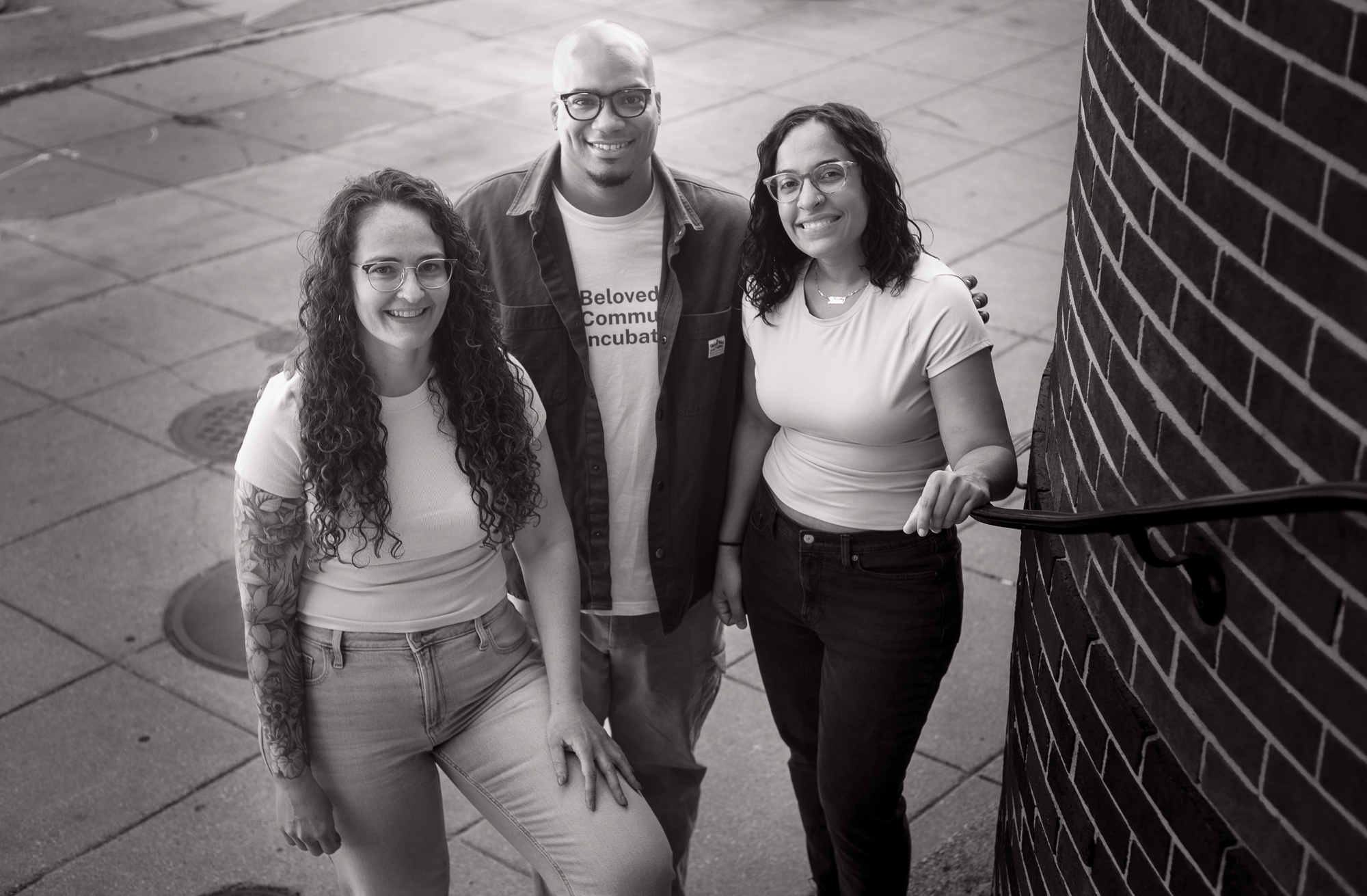
This article was produced as part of Humanities DC’s community journalism program. In response to fears over the 2016 presidential election results, community organizersKristen KaneandBianca Vazquezheld a series of listening sessions with their Ward 2 neighbors in the basement of Luther Place Memorial Church. Along with immigration, employment and uncertainty over whether the bills would get paid were chief among residents’ worries. Wage theft, harsh working environments, and a desire for a better life all surfaced in conversations about work. That same year, inspired by these listening sessions, Kane and Vazquez created Beloved Community Incubator, an organization that aims to foster a regionalsolidarity economybased on democratic, collective ownership and community accountability instead of profit-maximizing incentives. (The name references Dr. Martin Luther King Jr. ’s vision for a “beloved community” built on justice, peace, and community care. ) Worker-owned cooperatives—businesses where ownership and decision-making power are shared among workers—are key to the solidarity economy Kane and Vazquez are helping build. “We want there to be family-sustaining jobs in the DMV and for people to have autonomy and self-direction within their life,” says Kane. More than 10 years later, BCI’s work continues, and the need for economic security has only grown. As of April 2026, D. C. ’s unemployment rate isthe highest in the countryat6. 2 percent. This follows a year marked by layoffs, including the Trump administration’s reduction of the federal workforce. In January 2025, before the cuts, the District’s192,800 federal employeescomprisednearly a quarter of all D. C. ’s workers. By December 2025, this number dropped to168,400 employees. There are signs the private sector has not been spared from the economic fallout: At least 123 businesses announced layoffs in the D. C. area last year, according totheWashington Post. Amid widespread economic pressure, solutions may seem to be outside of the hands of everyday people. But the cooperative “one member, one vote” model is designed to give workers a say over what happens in their places of employment and their communities. BCI aims to help workers control their own destiny by building economic power through cooperative business ownership, access to non-extractive capital, and network-based support. Since its inception, BCI has grown to support a network of more than 30 cooperatives and has deployed more than $3 million and 2,000 hours in direct assistance, according to Kane. Cooperatives have deep roots in D. C. “Cooperatives have always been part of D. C. ,” saysKate Mereand, former program manager at the DC Department of Small and Local Business Development. “I think there was a lot of effort done to erase people’s understanding of cooperatives, but I do think that they’ve been a natural part of human commerce and organization for an incredibly long time. ”Cooperatives have been integrated in the D. C. economy since at least the 1800s, according toresearchbyglobal affairs scholarJohanna Bockman, though their popularity and legal recognition has shifted over time. “Cooperatives are one of the places that people started to integrate before desegregation,” Mereand says. “It was also seen as a threat in different ways. ”By the mid-1940s, Congress was holding hearings to discuss whether cooperatives were un-American and a “threat to private enterprise in the United States. ” Very few cooperatives formed in D. C. over the following decade, according to Bockman’s research. By contrast, cooperatives proliferated during the Civil Rights Movement of the ’60s until losing political favor in the mid-’80s. Relationship mitigates riskJessica Gordon-Nembhard, a scholar who has documented the history of Black cooperatives as a means of economic survival, says this model has a long record of resiliency in times of uncertainty. “Solidarity economics is a sustainable model because it’s about relationships, human beings relating to each other and human beings surviving and thriving,” says Gordon-Nembhard. “We also found during COVID, thatworker-owned companies were more likely to survive during crises. ”While layoffs are a common response to economic instability for many traditional businesses, worker cooperatives tend to seek alternate options. “Sometimes [cooperatives] might vote to take a pay cut for a little while to weather a storm or they might vote to change the allocation of time so the people who need more hours can get more hours,” says Gordon-Nembhard. “Like anything, it reflects the care that you put into it,” saysJosh King, co-founder ofThroneless Tech, a D. C. -based cooperative that builds software and digital security training for social justice movements. “[Cooperatives are] not a silver bullet that solves all of the problems, but it means that everyone is a meaningful participant, and everyone has a say. ”Like any business, cooperatives need funding to grow, but their uniqueworker-ownershipstructure and values are often misunderstood or out of alignment with the expectations of many traditional banks and investors. BCI’s DC Solidarity Economy Loan Fund is filling this funding gap by providing loans specifically structured for cooperatives. BCI’s DC SELF is a local chapter ofSeed Commons, a cooperatively governed nonprofit CDFI focused on building financial infrastructure to combat rising inequality. Their loan terms are intended to be non-extractive and patient; there are no personal guarantees or automatic payments. Meaning, if the business does not succeed, owners don’t lose their personal assets and loan repayment only begins when the cooperative is stable enough to afford it. In 2023, Throneless Tech received a $160,000 revolving line of credit from DC SELF, which King says was key to ensuring that workers were paid regularly and on time while they were working on a large project with an inconsistent payment schedule. According toEvan Wright, BCI’s outreach director,the real magic of the incubator’s work is its relational approach: a commitment to “deep accompaniment. ” The incubator prioritizes building genuine relationships, which allows them to offer personalized support to help cooperatives realize their visions while reaching financial sustainability. King says Throneless Tech’s relationship with BCI has grown beyond the loan. BCI has provided conflict facilitation, project management coaching, and sales support to handle headwinds related to federal funding cuts. In turn, Throneless Tech has supported BCI’s network by providing guidance to other cooperatives. “BCI really cares how well we do and what’s happening with us, and we really care about BCI doing well,” says King. “We’re really invested in this community of [the] local solidarity economy. ”Cooperation creates joyful possibilitiesGordon-Nembhard believes the solidarity economy “helps create harmony as well as joy,” citing a 2002study from Emory Universitythat found when people engage in cooperation, their endorphins, or happy hormones, increase. “For me, the future is this happiness and satisfaction through collective, cooperative, economic activity,” Gordon-Nembhard says. “I really feel like it’s our only chance to stay human. ”At a recent Earth Day celebration hosted by BCI network member Takoma Park Silver Spring Food Co-op, a live band played working-class blues while kids danced with elders. Neighbors toured the Zero Waste grocery store and learned about its community fundraising campaign to open a second location. As Kane spoke in Spanish with a group of women interested in learning about co-ops, a young girl scribbled on a BCI coloring sheet. Wright’s description of the incubator’s vision felt tangible: “[When] workers are able to own their labor and what it produces, that impact doesn’t just stay with the individual… It radiates out to the community. ”